

Caltta Launches "2G+4G" Digital Trunking Solution in CCW 2014

×
In radio communication, a repeater is a station that receives a signal and retransmits it, usually on a different frequency, so that two radios can talk beyond their direct range. The terms "repeater" and "physical-layer repeater" also exist in wired networking; this page is about the two-way radio repeater used to extend radio coverage.
A radio repeater listens on an input frequency and retransmits what it receives on an output frequency. When a radio transmits, the repeater receives the signal at its site, applies appropriate signal processing, and rebroadcasts it at higher power and from a better antenna position. Other radios tuned to the output frequency hear the transmission across a much wider area than a direct radio-to-radio link would allow. In a trunked system, a controller manages channel assignment in addition to this retransmission function.
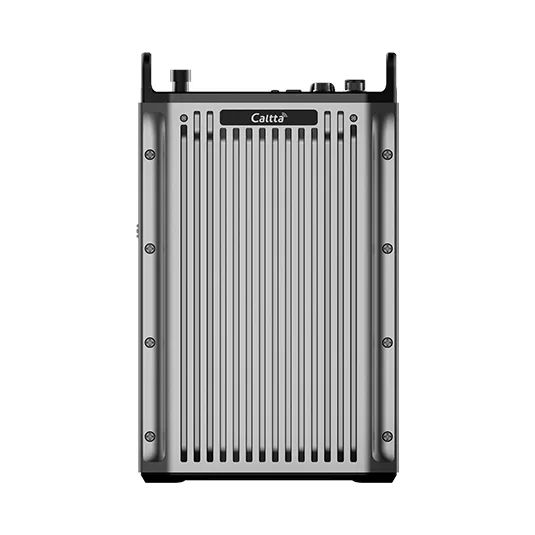
Direct mode needs no infrastructure and works well when users stay within line of sight. A repeater is needed when buildings, terrain or distance break that path, or when a site must cover an entire facility or area from one point. Repeater coverage depends on site height, antenna pattern, terrain and interference; it is confirmed by a site survey, not by a single range figure. The Caltta PR900 digital repeater is an example of a repeater used in professional radio networks.
Placement determines how much a repeater adds. Higher sites reduce obstructions, but they also require safe access, power and backhaul. Antenna height, gain, cabling loss and isolation between the receiving and transmitting antennas all affect performance. In dense areas, interference from neighbouring systems may limit the benefit of additional height. These factors should be checked together before the repeater location is fixed.
Copyright © Caltta Technologies Co., Ltd. All Rights Reserved.
+86-0755-86556659